Source: https://www.niddk.nih.gov/health-information/healthy-moments/Pages/archive.aspx#hm424
Dr. Rodgers suggests ways that kids can get physically fit and improve their health….
It is never too late to start
Source: https://www.niddk.nih.gov/health-information/healthy-moments/Pages/archive.aspx#hm424
Dr. Rodgers suggests ways that kids can get physically fit and improve their health….
Source: https://www.niddk.nih.gov/health-information/healthy-moments/Pages/archive.aspx#hm424
Dr. Rodgers suggests ways that kids can get physically fit and improve their health….
Source http://clubindustry.com/golds-gym/golds-gym-resolving-payroll-problem
…
Source http://clubindustry.com/golds-gym/golds-gym-resolving-payroll-problem
…

From left, Thomas Edison, Luther Burbank and Henry Ford. Two are still world-famous; the guy in the middle brought us many crop experiments, including the Himalayan blackberry that’s now inescapable in Seattle.
New York Botanical Garden/LuEsther T. Mertz Library/Biodiversity Heritage Library
In Seattle, blackberries are as much a part of the view as the Puget Sound — the twisting brambles so ubiquitous, they’re as likely to vex gardeners as delight them.
The tale behind the city’s blackberries turns out to be equally tangled. It starts at the end of the 19th century, at a time when American life was changing dramatically.
People were moving from rural areas to towns and cities, including Seattle. Industrialization was creating a new middle class.
Down the coast in Santa Rosa, Calif., an eccentric guy named Luther Burbank was hard at work on his experimental farm. Burbank didn’t have any formal training, but he was working feverishly t…
From left, Thomas Edison, Luther Burbank and Henry Ford. Two are still world-famous; the guy in the middle brought us many crop experiments, including the Himalayan blackberry that’s now inescapable in Seattle.
New York Botanical Garden/LuEsther T. Mertz Library/Biodiversity Heritage Library
In Seattle, blackberries are as much a part of the view as the Puget Sound — the twisting brambles so ubiquitous, they’re as likely to vex gardeners as delight them.
The tale behind the city’s blackberries turns out to be equally tangled. It starts at the end of the 19th century, at a time when American life was changing dramatically.
People were moving from rural areas to towns and cities, including Seattle. Industrialization was creating a new middle class.
Down the coast in Santa Rosa, Calif., an eccentric guy named Luther Burbank was hard at work on his experimental farm. Burbank didn’t have any formal training, but he was working feverishly t…
Source: http://brainblogger.com/2016/08/27/does-moderate-alcohol-consumption-improve-brain-function/
It is well documented that excessive consumption of alcohol is linked to various serious health problems. Heavy drinking is a known risk factor for diseases such as cardiovascular problems, some types of cancer, cirrhosis, dementia, depression, pancreatitis and high blood pressure, among others.But what about low-to-moderate alcohol consumption?
A number of studies published in recent years present a view rather different from the traditional negative assumptions. Contrary to popular beliefs, they claim that moderate alcohol intake can be beneficial.
Let’s first define what is heavy and what is moderate drinking. If you are a male and drink at least 15 drinks every week, then you are considered a heavy drinker. If you are female, 8 drinks per week are enough to put you in this category. On the other hand, if you are a male and do not exceed 2 drinks per …
Source: http://brainblogger.com/2016/08/27/does-moderate-alcohol-consumption-improve-brain-function/
It is well documented that excessive consumption of alcohol is linked to various serious health problems. Heavy drinking is a known risk factor for diseases such as cardiovascular problems, some types of cancer, cirrhosis, dementia, depression, pancreatitis and high blood pressure, among others.But what about low-to-moderate alcohol consumption?
A number of studies published in recent years present a view rather different from the traditional negative assumptions. Contrary to popular beliefs, they claim that moderate alcohol intake can be beneficial.
Let’s first define what is heavy and what is moderate drinking. If you are a male and drink at least 15 drinks every week, then you are considered a heavy drinker. If you are female, 8 drinks per week are enough to put you in this category. On the other hand, if you are a male and do not exceed 2 drinks per …
Source http://www.sonima.com/meditation/mindful-living/caregivers/
I remember the exact moment I received the call from the doctor that my mom had stomach cancer. It was June 2012, I was in my office and John Mayer’s “The Heart of Life” was playing in the background. The poignant lyrics hit me like a ton of bricks: “You know it’s nothing new, Bad news never had good timing.”
The doctor said that it was an adenocarcinoma—a word I’d never heard. My 67-year-old mom, who ate organic, played volleyball every Sunday, danced every weekend and was one of the healthiest people I knew had been diagnosed with a very aggressive and deadly form of cancer. That weekend, I took an indefinite leave from the accounting firm that I co-owned with my brother in Washington, D.C. and flew to Gainesville, Florida, to help my mom recover from surgery and begin chemotherapy. And just like that, I became one of the 43.5 million Americans who we don’t even know exist until we become one: A caregiver.
The Family Caregiver Alliance defines caregivers as anyone providing unpaid assistance and support to family members or loved ones who have physical, psychological, or developmental needs. While most caregivers tend to their aging parents, 14 percent of caregivers care for a child with special needs. More than 66 percent of caregivers are women, and the average …
Source http://www.sonima.com/meditation/mindful-living/caregivers/
I remember the exact moment I received the call from the doctor that my mom had stomach cancer. It was June 2012, I was in my office and John Mayer’s “The Heart of Life” was playing in the background. The poignant lyrics hit me like a ton of bricks: “You know it’s nothing new, Bad news never had good timing.”
The doctor said that it was an adenocarcinoma—a word I’d never heard. My 67-year-old mom, who ate organic, played volleyball every Sunday, danced every weekend and was one of the healthiest people I knew had been diagnosed with a very aggressive and deadly form of cancer. That weekend, I took an indefinite leave from the accounting firm that I co-owned with my brother in Washington, D.C. and flew to Gainesville, Florida, to help my mom recover from surgery and begin chemotherapy. And just like that, I became one of the 43.5 million Americans who we don’t even know exist until we become one: A caregiver.
The Family Caregiver Alliance defines caregivers as anyone providing unpaid assistance and support to family members or loved ones who have physical, psychological, or developmental needs. While most caregivers tend to their aging parents, 14 percent of caregivers care for a child with special needs. More than 66 percent of caregivers are women, and the average …
Source http://www.theptdc.com/2016/08/why-you-should-stop-stretching-your-clients/
The opportunity to work with clients one-on-one is a luxury–not only for our clients, but also for us coaches and trainers. Clients pay a premium of $60-200 to have our undivided attention for an hour. In turn, we use this time to motivate, challenge, and educate our clients with the hope that our influence carries over into the other 23 hours of their day. It only makes sense, then, that we need to use every minute of that time with the client wisely and effectively.
In order to do so, I propose that we stop warming up and stretching with clients. Why? They’re a waste of time within the session, and not to mention, a waste of money.
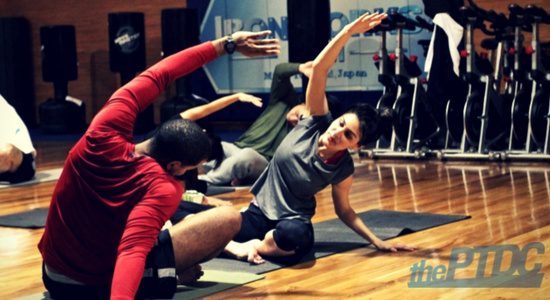
When I used to work for other personal training companies, I would spend 10-15 minutes warming up with my clients in the beginning of the session, and then leave 5-10 minutes at the end of the session to stretch them. That’s almost 30 minutes of the session spent doing things that the client can do on their own. If all a client has is 60 minutes, 2-3 times per week, these warm-ups and stretches are eating up big chunks of their real workout time.
Whether we like it or not, the only exercise most of our cli…
Source http://www.theptdc.com/2016/08/why-you-should-stop-stretching-your-clients/
The opportunity to work with clients one-on-one is a luxury–not only for our clients, but also for us coaches and trainers. Clients pay a premium of $60-200 to have our undivided attention for an hour. In turn, we use this time to motivate, challenge, and educate our clients with the hope that our influence carries over into the other 23 hours of their day. It only makes sense, then, that we need to use every minute of that time with the client wisely and effectively.
In order to do so, I propose that we stop warming up and stretching with clients. Why? They’re a waste of time within the session, and not to mention, a waste of money.
When I used to work for other personal training companies, I would spend 10-15 minutes warming up with my clients in the beginning of the session, and then leave 5-10 minutes at the end of the session to stretch them. That’s almost 30 minutes of the session spent doing things that the client can do on their own. If all a client has is 60 minutes, 2-3 times per week, these warm-ups and stretches are eating up big chunks of their real workout time.
Whether we like it or not, the only exercise most of our cli…

Reasons range from dismissal of symptoms to shame or stigma
…
Reasons range from dismissal of symptoms to shame or stigma
…
Source http://feedproxy.google.com/~r/tinybuddha/~3/Y-GVbS4bZiQ/

“We need never be ashamed of our tears.” ~Charles Dickens
We have all cried, all of us, some more than others.
But today I am not here to divide us by the liters of tears we have shed.
Today I want to unite us because we are all the same.
We all feel sad, stressed, overwhelmed, scared, and frustrated at times.
Any stay-at-home parent would understand my frustration, my misery, and my overwhelmed days.
It has eaten me up on the inside. I have been staying at home for the past seven years, looking after my kids, with no face-to-face interaction with adults like you and me.
All I do is get three boys fed and cleaned (god knows, sometimes I skip the cleaning part). All I do is break up fights. All I do is clear the never-ending mess in the living room. All I do is everything for them, but nothing for me.
Some days I ask myself why I have decided to stay at home.
Some days I ask myself why I have been given such a difficult task.
Some days I feel that I’m not cut out to be a mother.
Those are the days when I sit and curl up my knees, with my face in my hands, shoulders heaving, and my two-year-old by my side, wondering what’s wrong with Mama.
And after the tears have run d…
Source http://feedproxy.google.com/~r/tinybuddha/~3/Y-GVbS4bZiQ/
“We need never be ashamed of our tears.” ~Charles Dickens
We have all cried, all of us, some more than others.
But today I am not here to divide us by the liters of tears we have shed.
Today I want to unite us because we are all the same.
We all feel sad, stressed, overwhelmed, scared, and frustrated at times.
Any stay-at-home parent would understand my frustration, my misery, and my overwhelmed days.
It has eaten me up on the inside. I have been staying at home for the past seven years, looking after my kids, with no face-to-face interaction with adults like you and me.
All I do is get three boys fed and cleaned (god knows, sometimes I skip the cleaning part). All I do is break up fights. All I do is clear the never-ending mess in the living room. All I do is everything for them, but nothing for me.
Some days I ask myself why I have decided to stay at home.
Some days I ask myself why I have been given such a difficult task.
Some days I feel that I’m not cut out to be a mother.
Those are the days when I sit and curl up my knees, with my face in my hands, shoulders heaving, and my two-year-old by my side, wondering what’s wrong with Mama.
And after the tears have run d…
2:42
2:42
Source http://refineryfitnesspdx.com/ditch-the-sugar-in-your-diet/
With all the recent research being released about the detrimental effects of sugar on the body, many people are looking to reduce their sugar consumption. Excessive sugar consumption has been shown to lead to insulin resistance, increased stomach fat, increased inflammation in the body and a suppressed immune system. Unfortunately, for people eating a Standard American Diet which includes lots of processed food, sugar is impossible to avoid. It is added in the places you would expect like cookies, candy and pastries but also has a big presence in items like ketchup, yogurt, breads, pasta sauces, cured meats and chicken nuggets. It is ubiquitous in the American food system. However, there are some steps you can focus on to help you successfully avoid added sugar.
Add protein to your meals. Try to include protein with all of your meals. Adding protein will help you step off the sugar swing roller coaster by balancing blood sugar. Adding 10-20 grams of protein to every snack or meal will slow the adsorption of any sugar you do eat which should end the incredible sugar crashes that lead to uncontrollable sugar cravings.
Focus on a whole foods diet. The more you eat foods which are in their natural state like apples,broccoli, whole grains and leafy greens, the easier it will be to avoid added sugar. Steer clear of food in a package. Sugar is often added to packaged food to…
Source http://refineryfitnesspdx.com/ditch-the-sugar-in-your-diet/
With all the recent research being released about the detrimental effects of sugar on the body, many people are looking to reduce their sugar consumption. Excessive sugar consumption has been shown to lead to insulin resistance, increased stomach fat, increased inflammation in the body and a suppressed immune system. Unfortunately, for people eating a Standard American Diet which includes lots of processed food, sugar is impossible to avoid. It is added in the places you would expect like cookies, candy and pastries but also has a big presence in items like ketchup, yogurt, breads, pasta sauces, cured meats and chicken nuggets. It is ubiquitous in the American food system. However, there are some steps you can focus on to help you successfully avoid added sugar.
Add protein to your meals. Try to include protein with all of your meals. Adding protein will help you step off the sugar swing roller coaster by balancing blood sugar. Adding 10-20 grams of protein to every snack or meal will slow the adsorption of any sugar you do eat which should end the incredible sugar crashes that lead to uncontrollable sugar cravings.
Focus on a whole foods diet. The more you eat foods which are in their natural state like apples,broccoli, whole grains and leafy greens, the easier it will be to avoid added sugar. Steer clear of food in a package. Sugar is often added to packaged food to…